What Boom Lift Hire Involves
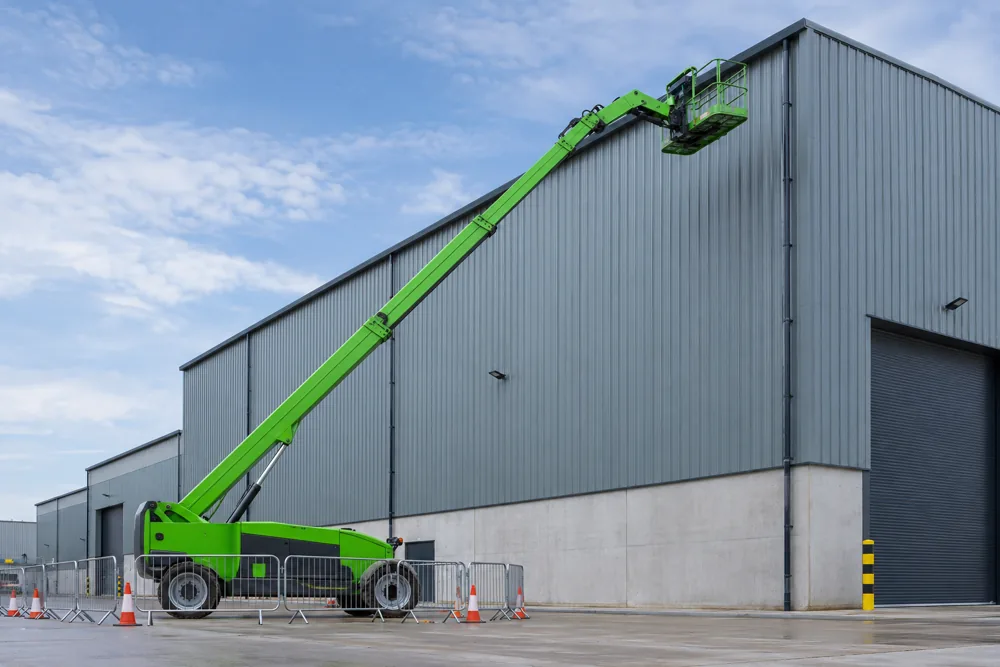
A boom lift carries its basket on an extending or articulated arm. A telescopic boom provides a relatively direct reach path, while an articulated boom can lift over an obstacle before moving towards the workface. Selection starts with the basket position and the space available for the chassis, rather than the tallest machine in a range.
Boom lifts can support cladding contractors, mechanical installers and facilities teams accessing external services. They are useful where a loading canopy, plant enclosure or landscaped strip prevents standing directly beneath the work. The assessment must also cover where the boom travels, not just where the basket finally stops.
Choosing The Equipment
Record the obstacle height and depth, the setback from the building and the intended working height. An articulated machine needs enough up-and-over clearance to negotiate a canopy safely. A telescopic machine needs an unobstructed boom path and suitable positioning room, which can be difficult in a narrow service yard with regular vehicle movements.
Check tail swing, basket rotation and the distance between the machine and surrounding structures throughout its movement. Entrapment can occur when the platform approaches steelwork, ceilings or other obstructions. Secondary guarding may be appropriate following assessment, but it does not replace operator competence, careful positioning or an effective rescue arrangement.
Delivery Routes, Standing Areas And Surface Limits
Choose the power source for the environment as well as the surface. An electric or hybrid option may be considered where noise or emissions matter, while an outdoor machine must still comply with its ground and wind restrictions. Agree segregation from forklifts and delivery vehicles before the lift arrives at a shared commercial yard.
Identify who can approve the working area before transport is arranged. Building managers may need to release a loading bay, verify a floor specification or approve barriers around a shared route. An unchecked assumption at this stage can prevent use of an otherwise suitable machine once it arrives.
Safe Use And UK Requirements
The Work at Height Regulations 2005 require work at height to be properly planned and carried out by competent people. Assess whether the task can avoid work at height before deciding on access equipment.
LOLER and PUWER also apply to the relevant equipment and its use. Ask for current examination documentation and machine instructions, and keep daily checks separate from the formal examination. Follow HSE guidance on MEWP selection and rescue, with a task-specific plan for lowering the platform if the normal controls cannot be used.
Personal fall protection must match the platform and risk assessment. IPAF’s fall-protection guidance distinguishes boom platforms from vertical lifts. Confirm the manufacturer’s requirements, suitable anchor points where applicable and the competence of the people using the equipment.
How The Hire Process Works
Start by sending the task description, location and intended dates. We use your enquiry to establish the equipment category and the practical information still needed, then ask your agreement before sharing the details with a suitable local hire firm.
Before accepting a quotation, confirm the proposed model, capacity, delivery arrangements and the exact hire period. Agree who receives the machine, who performs familiarisation and how faults are reported. Keep the delivery route clear and check the handover documents before the machine enters use.
During hire, follow the agreed method and stop if the task or conditions change. At completion, follow the supplier’s off-hire procedure and agree where the machine will be left ready for collection. Responsibility and hire charges may continue under the contract until the relevant off-hire conditions are met.
How The Machine And Delivery Shape Your Quote
Boom lift hire cost depends on reach, machine weight, power source, duration and transport requirements. Additional guarding, restricted delivery slots and specialist access assessments can change the scope. Give the supplier an honest picture of the working area so an apparently suitable machine is not rejected when it reaches the gate.
Ask for a written scope showing what is included and what would trigger an extra charge. Confirm cancellation terms, extensions and any restrictions on moving the machine to another location. There is no useful fixed price without knowing the work, the machine and the transport arrangements.
Boom Lift Hire Questions
Should I Choose An Articulated Or Telescopic Boom?
An articulated boom is useful when the basket must travel up and over an obstacle, while a telescopic boom suits a clearer reach path. The better choice depends on the working envelope, load and available standing position. Share measured obstructions and photographs so the proposed machine can be checked against the task.
What Details Are Needed For A Hire Quote?
A hire quote needs your site postcode, task, working height, preferred dates and expected duration. Include outreach, access widths, ground conditions and the number of people using the platform. Photographs help explain awkward access, but measured clearances and reliable floor-loading information may still be needed before the proposed machine can be confirmed.
Is An Operator Included With Hire?
An operator is not automatically included with platform hire. Tell us whether you need machine-only hire or operated access when sending your enquiry. The quotation should identify the arrangement, who carries out the work and what support is included, so you can confirm that the people on site have the competence required for the task.